
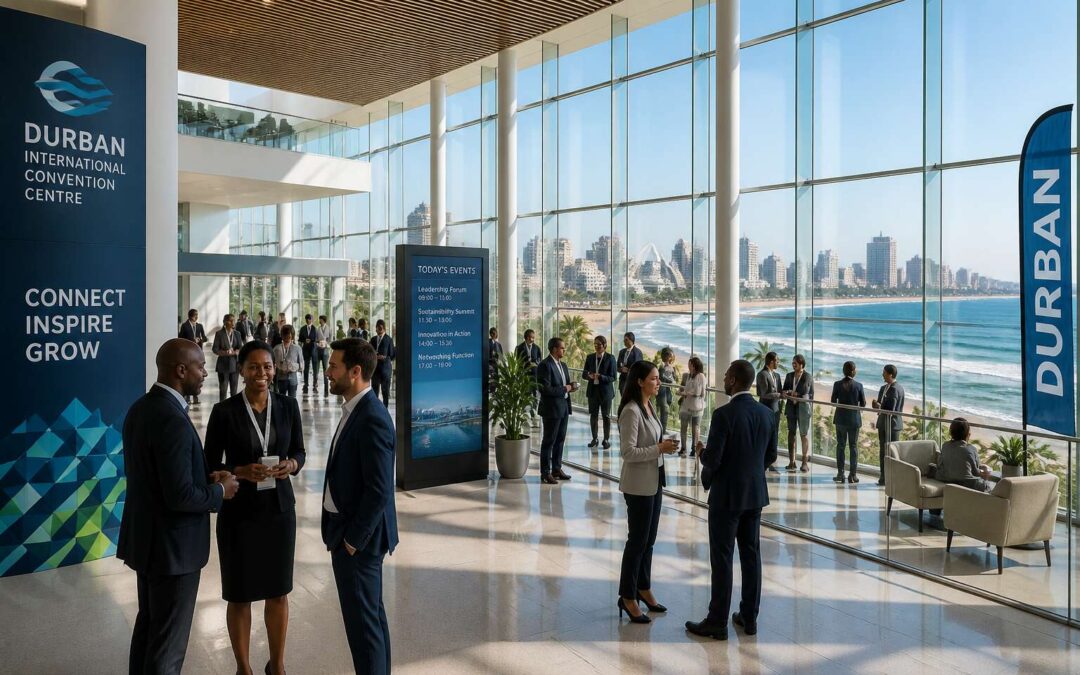
Why Durban is a Leading Business Events Destination
Strategic Location and Accessibility
Durban claims a rare distinction: it is Africa’s busiest port city, a position that connects global trade to the Indian Ocean. This location places business travellers within easy reach of major markets. The city’s infrastructure was built to move people and goods efficiently, a critical advantage for any corporate gathering.
Delegates arrive through King Shaka International Airport, a modern hub with direct flights to key African and Middle Eastern cities. From there, a conference centre in Durban is under thirty minutes away! The highway network links Johannesburg and Cape Town, while the port supports regional trade. This ease of access means less transit time and more focus on business.
- Direct flights from over ten international destinations
- A 30 minute airport transfer
- Integrated rail and road corridors
World-Class Infrastructure
A venue must be more than a room with chairs. It is an ecosystem of technology, service, and space working in concert. When selecting a conference centre in Durban, the technical backbone is as critical as the seating capacity. The infrastructure is engineered for high-performance events, where every presentation happens without a hitch.
The main plenaries offer significant floor spans that accommodate large audiences without a sense of crowding. Acoustics are designed to keep a keynote speaker crisp without needing to strain. Breakout rooms shift from boardroom style to theatre style in minutes, facilitated by experienced crews who remain invisible until needed.
The supporting infrastructure is robust and detailed.
– Fibre connectivity with enough bandwidth to stream high-definition content to international delegates.
– Rigging points and trusses for complex stage lighting and heavy audio equipment.
– Independent power feeds for backup generation, ensuring continuity during load shedding.
– Mobile app integration for scheduling and live polling, keeping attendees engaged.
These elements create a venue that feels effortless. The focus remains on the message, not the mechanics of delivering it. For organisers, this level of support is the difference between a stressful execution and a seamless production. The true measure of a conference centre in Durban is its ability to maintain momentum, allowing ideas to flow from the stage to the audience without friction or delay.
Year-Round Mild Climate
Durban’s winter average of 21 degrees Celsius quietly reassures planners from colder markets. That consistency matters when choosing a conference centre in Durban. The mild climate lets attendees move between sessions without weather delays, and it reduces the need for extreme climate control in the venue. No snow days, no heat waves, just a workable environment.
Organisers can confidently book outdoor networking events or sunset receptions. Coastal breezes temper summer peaks, while winter afternoons stay pleasant for afternoon excursions. I have heard logistics managers say this predictability saves them from building expensive contingency plans. Weather becomes one less variable in the equation. That is the quiet luxury of doing business in this city.
A Growing International Reputation
International meeting planners verify everything. Durban’s reputation has grown because it survives that verification. When global associations evaluate host cities, they examine delegate feedback, economic outcomes, and the capacity to handle high stakes programmes. A conference centre in Durban that clears those hurdles consistently earns a distinct form of trust in this industry.
That trust is visible in patterns:
- Inbound event inquiries from non-African markets have risen steadily.
- International associations now list Durban as a confirmed host rather than a speculative option.
- Repeat conference bookings occupy a growing portion of the annual calendar.
Planners from Europe and Asia describe the responsiveness of Durban’s business events community as the decisive factor. I have watched this shift develop over recent event seasons. Those impressions convert into foreign delegate spend and stronger hotel occupancy. This reputation is not abstract. It appears in booking confirmations and in organisers who keep returning to a conference centre in Durban year after year.
Top Features to Look for in a Durban Event Venue
Capacity and Flexible Layouts
Capacity in a conference centre in durban is an emotional calculation. A room sized for two hundred creates a particular pressure when only fifty arrive. Empty chairs imply an audience’s judgment. Conversely, a space too small creates an anxiety that no agenda can override. Therefore, evaluate venues on their ability to modulate scale through flexible layouts.
- Fixed theatre seating for focused delivery.
- Moveable rounds for meals and mingling.
- Breakaway seminar rooms with acoustic partitions.
Each layout shifts the psychological distance between speaker and listener. A venue that offers these options allows you to craft the room to match your event’s intention, rather than adapting your goals to an inflexible hall. The right capacity remains a dynamic tool, never a static figure.
In-House Technical Support
A single projector failure can unravel an entire morning’s agenda. When the screen freezes mid-presentation, the audience’s attention scatters. The best insurance is a conference centre in durban with in-house technical support that anticipates these moments before they happen. I have watched event managers scan for an AV technician during a keynote, and the panic is avoidable when the venue employs a dedicated team.
That team should offer more than a helpdesk. Look for engineers who understand the room’s acoustic quirks, lighting presets, and bandwidth limits. They need to be on standby during every session, not summoned from an external supplier at an additional fee. A robust support structure typically includes:
- A monitored control room for real-time adjustments
- Backup cables and spare microphones within arm’s reach
- Hybrid event streaming assistance with latency checks
These details separate a seamless experience from a technical breakdown. For a conference centre in durban, the support staff become your invisible co-hosts, ensuring every slide, click, and video lands without friction.
Catering and Hospitality Services
When the morning break stretches into forty minutes, the culprit is often a stalled coffee queue. Delegates forget the agenda when they are hungry, and a conference centre in Durban lives or dies by its catering rhythms. The kitchen must work like a backstage crew, delivering plated meals for three hundred guests within a twenty minute window. Served lunch timing matters as much as the food itself, because a cold buffet undermines the most polished keynote.
Hospitality extends beyond the plate. A venue’s front-of-house team should remember returning clients by name and know when to refill a water glass without interrupting a conversation. They track dietary requirements from registration to the table, which becomes essential when delegates include kosher, halaal, and vegan requests. Look for a venue that offers:
– Dedicated barista stations positioned away from high traffic corridors
– Modular buffet layouts that allow for multiple service points
– A hydration station with infused water on every floor
The best venues treat catering as an extension of their planning team. They coordinate meal timings with the session schedule, so a dense workshop block ends with refreshments ready in the foyer, not a scramble to shift tables. A conference centre in Durban with attentive service staff turns meals into a quiet logistics win, allowing your delegates to focus on networks and new ideas instead of their next snack.
Parking and Accommodation Proximity
Few organisers consider the journey from the hotel lobby to the registration desk, yet this transition shapes the entire delegate experience. A conference centre in durban might shine on paper, but if attendees spend forty minutes circling for parking or waiting for a shuttle, the sheen fades quickly. The best venues treat the arrival sequence as part of the event itself, offering secure parking bays that are validated for delegates and positioned close to the main entrance. You should confirm whether the venue provides a dedicated drop-off zone for ride hailing services, because that single gesture spares your guests from navigating a busy lot with luggage in hand.
Proximity to accommodation is a quiet multiplier for event success. When your chosen conference centre in durban sits within walking distance of three or four reputable hotels, you gain an immediate advantage. Delegates can return to their rooms for a fresh change of shirt before the gala dinner, or take a quick rest between sessions without losing momentum. For international guests, that walking distance eliminates the stress of unfamiliar transport systems, which is often the difference between a relaxed attendee and a flustered one. A venue that pairs itself with partner hotels for negotiated rates is worth considering, as this simplifies your planning and saves your budget for other priorities.
The practical checks are straightforward:
– A minimum of one parking bay for every five delegate seats
– 24 hour security with camera coverage in the parking area
– A covered walkway from the hotel across the road
– Shuttle service for hotels beyond a 1.5 kilometre radius
I have seen events stumble because the venue looked stunning but sat in a maze of one way streets. The solution is to run a test drive during peak traffic hours before you commit. Map out the route that delegates will actually take, whether they arrive by car, shuttle, or aeroplane. The right conference centre in durban makes this part of your logistics feel effortless, allowing your attention to remain on content and speakers rather than commute complaints.
Sustainability and Green Initiatives
When you evaluate a conference centre in durban, the sustainability story often tells you more than the brochure does. I look for venues that treat waste as a resource, not a problem. That means visible recycling stations, but also a documented policy for organic waste. The Green Building Council of South Africa certifications matter, because they force accountability.
Water conservation is non-negotiable in this region. For a conference centre in durban, rainwater harvesting and low-flow fittings demonstrate a commitment that goes beyond marketing. Energy efficiency from solar arrays or load-shedding resilience also reveals long-term thinking.
- Verify the venue’s carbon footprint measurement
- Check if they source food from local farmers
- Ask about single-use plastic elimination
These features reduce your event’s ecological load, which is a quiet form of respect for the delegates and the city itself!
Exploring the Best Conference Facilities in Durban’s Key Neighbourhoods
The Beachfront and Coastal Venues
The ocean is not scenery. It is a working component of the event. Along Durban’s golden mile, conference rooms face the breakers directly. Delegates can step from a morning session onto the sand. One venue operates a glass-walled auditorium. Waves crash behind the speaker. Another venue extends onto a pier. Its terrace catches the afternoon sun. This conference centre in Durban offers a coastal identity that inland venues cannot match.
Consider the practical advantages:
- Immediate beach access for breakout activities.
- Natural sea breezes that cut cooling costs.
- Ocean views that reduce attendee stress.
uShaka Marine World sits minutes away, adding post event recreation. For international delegates, the Indian Ocean horizon leaves a lasting impression. Serious conferencing and coastal energy coexist here with ease!
City Centre Business Hubs
Downtown Durban carries a different kind of gravity. The tower blocks cast long shadows over narrow streets, and the hum of commerce never quite fades. Here, a conference centre in Durban sits in the thick of it, minutes from the harbour and the courthouses. You step out of a session and into the nervous system of the city itself. The energy is dense, urgent, and it seeps into the boardrooms above the traffic.
The advantages of this location are practical and immediate:
– Unmatched access to banks, legal firms, and headquarters.
– Direct routes to the port and the airport via the M4.
– A concentration of hotels within walking distance for delegate accommodation.
– The bustling Warwick Junction and market district for post event exploration.
These venues do not offer the sea breeze. They offer the quiet intensity of the deal making floor. The windows look onto other glass towers, and the atmosphere is one of focused ambition. For corporate boards and regulatory bodies, this conference centre in durban provides a sense of being at the centre of the province’s economic machinery, a stark contrast to the leisure of the coast.
Umhlanga and Northern Suburbs
Umhlanga presents a distinct conference centre in Durban experience. The area combines office parks with beachside living. Delegates gather near the Gateway mall, and many venues overlook the greenbelt. The northern suburbs, including Durban North and La Lucia, offer quieter facilities set among residential streets. Here, a conference centre in Durban might occupy a renovated estate or a modern business park. The choice between these neighbourhoods often comes down to the desired atmosphere.
Useful comparisons for event planners:
- Travel time from King Shaka to the venue.
- Proximity to the N2 and M4 highways.
- Availability of secure parking and shuttle services.
- Nearby accommodation for overnight delegates.
These practical details influence the experience for delegates. The northern corridor excels at providing calm, focused spaces without the urban crush.
Airport-Area Conference Options
King Shaka International Airport sits approximately thirty kilometres from Durban’s core, a reality that shapes logistics more than most planners first anticipate. The precinct surrounding the airport has matured into its own ecosystem, with several hotels and business parks offering a conference centre in Durban that eliminates the morning commute entirely. For international delegates arriving on red-eye flights, the ability to roll luggage from customs into a boardroom within twenty minutes is a quiet luxury.
This adjacency carries psychological weight. A group that gathers near the tarmac operates on a different cadence, unburdened by city traffic or the distraction of beachfront leisure. The venues here anchor themselves in efficiency. They trade panoramic views for soundproofed walls and direct runway access, which suits product launches and intensive strategy sessions.
– Direct access to the N2 for rapid transfers to Umhlanga or the city centre.
– Shuttle partnerships with adjacent hotels reduce ground transport planning.
– Secure, gated parking that feels safer for after-hours events.
The conference centre in Durban located here often pairs with long-stay accommodation, allowing teams to extend their working days without worrying about bar closing times or long returns. It is a pragmatic choice, stripped of romance but rich in operational clarity. For planners prioritising frictionless movement, this zone offers the least resistance between arrival and execution.
How to Choose the Right Conference Venue for Your Event
Define Your Event Objectives
Picking a venue without a clear picture of your event is like navigating Durban’s bustling promenade without a map. You will reach the beach, but you might miss the perfect spot entirely. Before you contact a single sales manager, sit down and define your event’s core purpose. Is the goal to launch a product, train staff, or foster high-level industry networking? This decision will drive every other choice, from the room’s flip chart to the main plenary’s configuration.
For example, a conference centre in Durban might offer cutting-edge connectivity, but that proves useless if your primary objective is an intimate, closed-door board session. The physical space must actively serve your operational goals. Consider the type of delegates you are expecting, as they will dictate specific requirements, such as breakout rooms for workshops or a cavernous expo hall for vendors.
To structure this thought process, consider these primary event categories:
- Knowledge transfer sessions, which often require tiered seating and high-fidelity audio.
- Strategic planning meetings, which demand natural light and a quieter, isolated wing.
- High-energy product launches, needing dramatic lighting rigs and substantial load-in access.
Once the objective is locked, the suitability of the space becomes obvious. This clarity also simplifies your budget discussions. You are no longer paying for square footage; you are paying for a functional asset that guarantees your outcome. The best conference centre in Durban for your specific date is the one that facilitates your agenda with minimal friction, not the one with the most impressive lobby. Without this initial groundwork, you risk being swayed by luxurious decor instead of practical utility.
Assess Audio-Visual and Connectivity Needs
A room with a view is a pleasure, but a room without reliable bandwidth is a crisis. In a digital age, the quality of your conference centre in Durban hinges on its invisible infrastructure.
The venue’s technical backbone dictates the flow of your programme. A supplier announcing a merger, a surgeon demonstrating a live procedure, or a CEO addressing regional offices, all demand crystal clear audio and uninterrupted streaming. The right conference centre in Durban provides a backbone that simply works.
You must interrogate the specifics. High-fidelity sound systems are non-negotiable for plenaries, while smaller spaces require adaptive acoustics to prevent sound bleed. Consider the lighting grid, not just for ambiance, but for its programmability during complex product reveals.
When it comes to connectivity, ask about the fibre optic pathways and the WiFi’s capacity for simultaneous users. Forget about casual browsing. Your delegates will be uploading heavy files and engaging with live feeds. For hybrid events, the need for low latency and redundant connections is absolute.
I recommend you look for these non-negotiable elements:
1. Network redundancy: A backup internet source that automatically engages if the primary fails.
2. Integrated sound and lighting: A control system managed by in-house experts, ensuring seamless transitions.
3. Dedicated power supply: Access to a continuous power source (UPS) to protect critical data and presentations.
4. Deep load-in access: A wide, level entrance to accommodate large staging and heavy equipment.
Technical support is not an amenity, it is a requirement. A competent in-house team acts as a safety harness, allowing you to focus on your audience rather than troubleshooting. The venue’s infrastructure should be a silent partner in your success, providing a stable foundation for your content.
Compare Pricing and Packages
Obtaining comparable quotes from a conference centre in Durban requires digging past the headline rate. One venue may quote per delegate, another per room, and a third per half day. The difference in final cost can exceed thirty percent.
Build a checklist that mirrors your actual programme. Include overtime labour, extra screens, and setup hours. A package that bundles catering and flooring may not suit a bare-bones meeting.
- Compare the cost of a full tech check the day before
- Check if VAT is quoted separately
- Ask about discounts for weekday bookings
The written proposal should state exactly what is included. That clarity is the only reliable basis for decision.
Read Reviews and Site-Inspect
Two hundred and twelve verified reviews of a venue in Umhlanga all praise the sea views. The plumbing is a different story. Online reputation offers a useful starting point, but for a conference centre in Durban, the site inspection is the moment truth surfaces. Walk the corridors during a scheduled tea break. Observe the acoustics with people in the room, not just a technician clapping. Check the air conditioning registers for dust and the kitchen for fire safety certificates. The charm of a coastal terrace fades when a projector fails due to humidity.
A thorough site inspection must cover technical realities. Request to see the backup power system. Ask about the temperature control settings in smaller breakaway rooms. Speak with a duty manager about recent load shedding experiences. Their answer will reveal more than any glossy brochure. Make a list of the specific requirements for your agenda and tick them off in person. The physical proof of power, water pressure and bathroom cleanliness outweighs polished marketing material. The right venue feels reliable in person, not just in photographs.
Enhancing Your Conference Experience Beyond the Boardroom
Team-Building Activities and Adventure Options
According to a recent industry survey, 68 percent of delegates rank team building as the most memorable part of an event. The conference centre in Durban positions you steps from the water and the bush. You can swap sticky notes for paddleboards and flipcharts for hiking trails. For a structured break:
- Horseback rides on uMhlanga beach
- Twilight sailing cruises from the Point
- Wildlife tracking in the Kenneth Stainbank Nature Reserve
These outings create shared memories that a slide deck never will. I have seen executives loosen up over a shared paddle. Colleagues who argue in the boardroom learn to row together. That is the true value of a coastal conference.
Post-Event Dining and Nightlife
The evening is where the impeccable architecture of a conference centre in Durban meets the atmospheric reality of a subtropical night. The air carries salt and the low hum of the ocean.
Dining becomes an extension of the networking day. The city’s culinary scene offers a spectrum, from casual beachfront brasseries to formal establishments requiring a sharper wardrobe.
– Fresh linefish prepared with a Portuguese twist.
– Durban’s famous bunny chow for the adventurous delegate.
– Multi-course tasting menus featuring local game.
Nightlife ventures beyond the predictable hotel lobby bar. Venues in the Point Waterfront offer live music and harbour views. A short journey north, the Florida Road precinct provides a collection of intimate cocktail bars and lively eateries.
Delegates often find that the most candid conversations happen after sunset. The formal agenda dissolves, replaced by a shared meal or a quiet drink. This informal exchange frequently carries more weight than any whiteboard session. It is an island of human connection in a city that rarely sleeps. The location encourages you to remain for the sequel to your event, which is the true test of a memorable host.
Cultural and Leisure Attractions for Delegates
Between sessions, delegates can visit the Durban Art Gallery or browse the Essenwood Market. These places show the city’s creative output. The Zulu beadwork and contemporary paintings offer context that no presentation can match.
A short drive from a conference centre in durban, the Umgeni River Bird Park provides a quiet break. I have watched senior managers relax completely while watching the free-flight aviary!
- Guided tours of the Inanda Heritage Trail
- Photography walks around the harbour
The options require comfortable shoes and a curious mind. Afternoons are best spent exploring beyond the sessions.